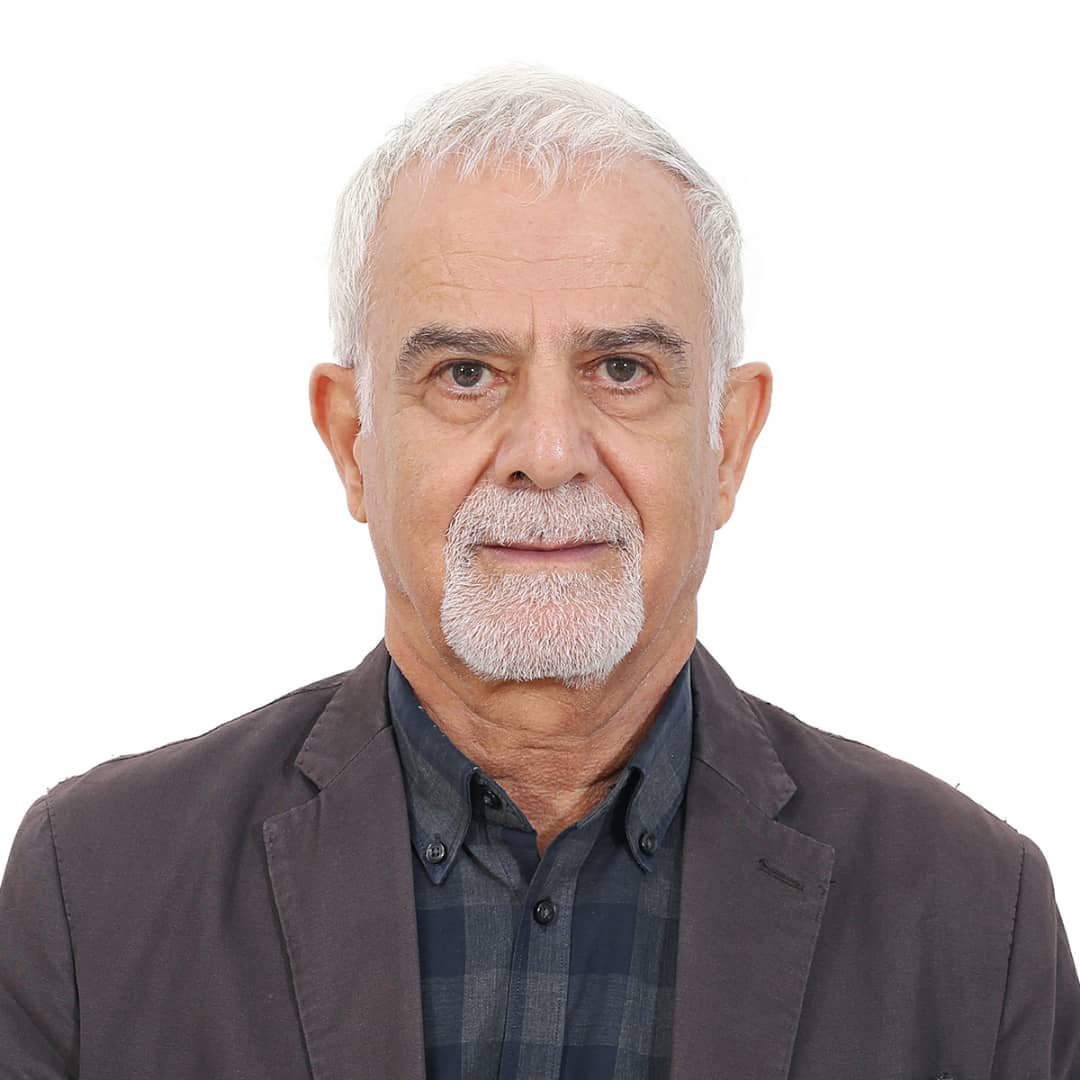
Dr. Karim Rastegar was born in 1947 in Shiraz, Iran, into a moderately religious family. From an early age he was drawn to the Qurʾān, spending his secondary school years in deep study of the text and its meaning — a formation that would shape the entire arc of his intellectual life.
As a medical student at Pahlavi University in the mid-1960s, Dr. Rastegar became convinced that meaningful social reform required a rigorous understanding of the laws governing human society. This conviction drew him into political activism and, for a decade, into membership in an Islamic revolutionary organization. It was during years of political struggle, imprisonment, and solitary confinement that his understanding of Islam underwent a fundamental transformation.
Confronting the limitations of Marxist theory — which dominated the ideological landscape of the Iranian left — and finding that the prevailing interpretations of Islam offered no adequate scientific framework for understanding society or nature, he turned instead to the Qurʾān itself.
In solitary confinement, with a copy of the Qurʾān as his only companion, Dr. Rastegar began reading the text differently — not as devotional literature, but as a book that contained, in its own distinctive language, a coherent description of the physical and social world.
— From his biographyHe emerged from that experience with a research program that would occupy the rest of his life. After completing his medical degree, Dr. Rastegar pursued postgraduate training in psychiatry, then traveled to the United Kingdom to undertake doctoral research in neuroscience at University College London, graduating with a Ph.D. in 1990. His research focused on the neurophysiological basis of the soul — a question he had carried from the Qurʾān into the laboratory. Working with experimental models of hippocampal function and memory, he developed an empirical framework for understanding how the brain and the soul, as the Qurʾān describes them, relate to one another. His thesis was awarded one of UCL's prizes for best research of the year.
Returning to Iran, Dr. Rastegar joined the faculty of Shiraz University of Medical Sciences, where he served as Associate Professor of Neurophysiology and Head of the Department of Physiology from 2001 to 2009. He continued clinical practice as a consultant psychiatrist for over two decades, while simultaneously pursuing the larger scholarly project that had begun in that prison cell decades earlier. He retired from the university in 2020.
The result of that lifelong inquiry is the Qurʾānology series — twenty volumes covering cosmology, physics, earth sciences, the origin and evolution of life, neuroscience, psychology, social theory, and theology. All volumes are complete in Persian. English translations are being prepared under the auspices of the Quranic Sciences Institute. The first volume, Fundamentals of Qurʾānology, is complete and currently under review with academic and specialist publishers.
Dr. Rastegar's work does not seek to harmonize the Qurʾān with science, nor to subordinate scientific findings to religious authority. His argument is more precise: that the Qurʾān encodes empirical truths in a form designed to be understood progressively as human knowledge advances — and that reading it carefully, in light of what we now know, reveals a coherent and scientifically serious account of the world.
A 20-volume work spanning every domain of creation — from cosmology to neuroscience. Below are three of the series' most developed volumes.
Complete Publication ListThe foundational volume of the series. Explores how the Qurʾān communicates empirical truths across centuries through its unique epistemological architecture.
An exploration of the Qurʾānic concept of the soul through the lens of neuroscience — examining consciousness, free will, and human identity. English translation complete.
A Qurʾānic examination of the sabʿ al-samāwāt as the seven protective layers of Earth's atmosphere, shielding life, through the lens of atmospheric science. English draft complete.